If you run a business in San Antonio and you have noticed fewer clicks landing on your website even though your rankings look fine, you are not imagining it. Search has changed shape. When someone asks Google or ChatGPT a question today, they often get a full answer right there on the results page, built from a handful of sources the AI decided to trust. Getting your San Antonio business cited by ChatGPT and Google AI Overviews is now one of the most direct ways to stay visible, because if your page is not one of those sources, a competitor’s page probably is. This guide walks through exactly what it takes to earn that citation, step by step, without the guesswork.
Why Citations in AI Search Now Decide Who Wins Local Customers
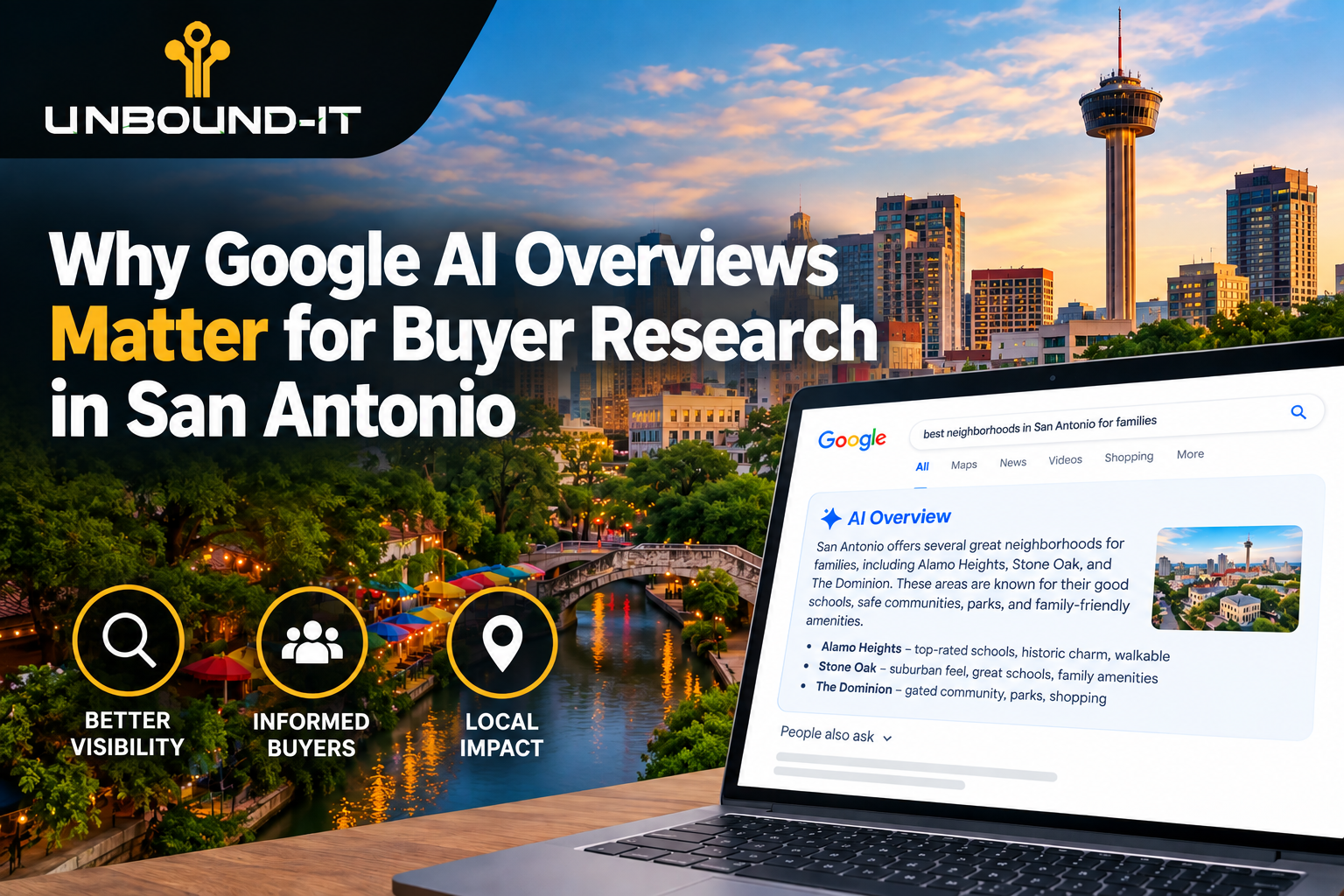
Google’s AI Overviews now reach more than 2.5 billion monthly users, and AI Mode has crossed one billion users on its own. That is not a niche feature anymore. It is how a large share of your future customers are searching for a plumber, a law firm, a dental practice, or a home remodeling company in San Antonio. On top of that, ChatGPT itself is answering millions of local and commercial questions every day through its built in search feature, pulling live results and attaching source links to the sentences those facts came from.
Here is what changes for a local business owner. In the old model, ranking in the top three organic spots on Google was usually enough to get the click. In the new model, a user can get their full answer without clicking anything, and the only businesses that still capture attention are the ones named or linked inside that AI generated answer. If your competitor’s remodeling company gets cited for “best home remodelers in San Antonio” and yours does not, you lose that customer before they ever see your website. This is why citation visibility has become a bottom of funnel concern, not a future trend to think about later.
What It Actually Means to Get Cited by These Systems
Getting cited is different from simply ranking well, and understanding that difference changes how you should be spending your time and budget.
Google AI Overviews generate an answer using retrieval augmented generation, meaning the system pulls from pages already crawled and indexed in Google’s core search system, then attaches links to the specific sentences those facts came from. According to Google’s own developer documentation on AI features and your website, there are no separate or secret requirements to appear in these features. The same fundamentals that earn strong organic rankings are what earn a citation, but AI Overviews are pickier about clarity, structure, and whether a page answers one specific question cleanly rather than covering a topic in a vague, generalized way.
ChatGPT works a bit differently. When a question benefits from current information, such as a request for services in a specific city, ChatGPT triggers its search tool and queries the web through its own crawlers and search partners. OpenAI has confirmed that ChatGPT search returns links to relevant web sources and that publishers can be featured when their content is accessible and directly answers the question being asked. A citation here means your business name, or your page link, shows up as one of the handful of sources ChatGPT decided to trust for that specific answer.
In both cases, the pattern is the same. The AI is not picking a winner from a popularity contest. It is picking whichever page most precisely and most clearly answers the exact question a person asked. That single idea should guide almost everything you do from this point forward.
The Groundwork Your Website Needs Before AI Systems Will Trust It
Before you touch a single word of content, your site needs to be technically ready to be found and read by AI crawlers. Skipping this step is the most common reason a well written page never gets cited.
Confirm You Are Actually Crawled and Indexed
AI Overviews can only cite what Googlebot has already crawled and indexed. There is no separate AI specific crawl running behind the scenes. If a page is not sitting in Google’s index for a topic, it has no chance of being pulled into an answer, no matter how well it is written. Check Google Search Console for coverage issues, confirm your important service and location pages are indexed, and make sure nothing important is buried behind JavaScript rendering that a crawler struggles to process.
Check That You Are Not Accidentally Blocking AI Crawlers
A surprising number of small business websites block AI bots without realizing it, often through an old, overly broad robots.txt rule that was written years ago for a completely different reason. If GPTBot or OAI-SearchBot cannot reach your pages, ChatGPT can never cite you from a live web search, even if your content is the best answer available. The fix takes a developer a few minutes once identified, but most business owners never think to check it.
Remove Directives That Quietly Exclude You From Snippets
Pages carrying a nosnippet, data-nosnippet, or an overly restrictive max-snippet directive can look perfectly healthy in every other way and still be silently excluded from AI Overviews. This is one control that quietly sabotages otherwise strong content, and it is worth a direct audit of your key service pages rather than an assumption that everything is fine.
If your current website was built years ago on an older platform, this is usually the point where a professional website development and design refresh pays for itself, since a modern, cleanly coded site removes most of these barriers automatically.
Structuring Your Content So AI Engines Can Lift It Directly
Once the technical groundwork is solid, structure becomes the next biggest factor. AI systems are not reading your page the way a human does. They are scanning for a clean, extractable answer they can lift and attribute.
Lead With a Direct Answer, Then Explain
Every important page should open with a short, self contained sentence that answers the core question outright, before any background, story, or context. If someone asks “how much does local SEO cost in San Antonio,” the page should state a real answer in the first sentence or two, then expand into detail afterward. Research on AI Overview citations shows that a large share of citations pull from the top portion of a page, so burying your best answer under three paragraphs of introduction is one of the most common reasons strong content gets passed over.
Answer One Specific Question Per Section
A page that loosely covers “everything about SEO” is much less likely to earn a citation than five separate sections that each answer one narrow, specific question with real depth. AI Overviews and ChatGPT both run what is effectively a fan out process, breaking a single user question into several related sub queries behind the scenes. The more specific, well answered questions your content contains, the more chances you have to be the source pulled in for one of those sub queries. This is exactly why a page built around a real FAQ, like the one at the bottom of this article, tends to outperform a single long block of general advice.
Use Clear Headings Built Around Real Questions
Structure your H2 and H3 headings the way a person would actually phrase a question, not the way a marketer would phrase a slogan. “How much does website development cost in San Antonio” will get picked up far more reliably than a vague heading like “Our Pricing Philosophy.” This single change in how headings are written is one of the fastest improvements a business can make to existing content.
Present Comparisons and Data in Tables
When information involves numbers, timelines, or side by side comparisons, a simple table is easier for an AI system to parse and extract accurately than the same information written out in paragraph form. If you are comparing service tiers, response times, or pricing options, a table gives the AI a clean structure to summarize instead of forcing it to infer meaning from prose.
Building the Local Trust Signals That Actually Get San Antonio Businesses Cited
Content structure gets you noticed. Trust signals get you chosen over the business down the street with a similar page. This is the part most San Antonio businesses skip entirely, and it is where the real competitive gap sits.
Strengthen and Actively Maintain Your Google Business Profile
Your Google Business Profile is one of the clearest, most direct signals Google has about who you are, where you operate, and whether customers trust you. Keep your categories, service areas, hours, and photos current, and respond to every review, good or bad. A profile that has not been touched in a year sends a weak trust signal, and AI systems weigh trust heavily when deciding which local business to name.
Earn Real Mentions Beyond Your Own Website
AI citation systems are increasingly looking for consensus, meaning your business name showing up consistently across local directories, industry publications, and community sites, not just on pages you control. A law firm that is mentioned on a legal directory, a local news site, and an industry association page builds a pattern of credibility that a single well optimized website page cannot replicate on its own.
Collect and Display Genuine Customer Reviews
Reviews do double duty. They influence a human reading your Google Business Profile, and they act as a trust signal for AI systems evaluating whether your business is the kind of source worth citing. A steady stream of recent, detailed reviews, ideally mentioning the specific service someone received, outperforms a large pile of old, generic five star ratings.
Adding Schema Markup That Makes Your Pages Machine Readable
Structured data will not force an AI system to cite you, but it removes friction and makes your page far easier to interpret correctly. Schema.org provides the standardized vocabulary that search engines and AI systems both rely on to understand what a page actually contains.
At minimum, a local San Antonio business should have LocalBusiness schema with accurate name, address, phone number, and service area data, along with FAQPage schema on any page that contains a genuine question and answer section. Service pages benefit from Service schema, and any page with pricing should mark that pricing up clearly rather than leaving it embedded only in an image or a JavaScript rendered widget that a crawler may never load. Google has stated there is no special hidden schema tag that guarantees an AI Overview citation, but clean, accurate markup consistently shows up as a shared trait among pages that do get cited, because it removes ambiguity for the system doing the summarizing.
Publishing Original Content That AI Systems Cannot Get Anywhere Else
Google’s own guidance draws a direct line between what it calls commodity content and non commodity content. A generic article titled “5 Tips for Choosing an IT Company” that repeats what fifty other sites already say adds very little and is easy for an AI system to skip in favor of a more original source. A page built from first hand experience, such as real project data, a specific pricing breakdown for San Antonio clients, or a case study with actual numbers, is far harder to replace and far more likely to become the source an AI system leans on.
This is also where local specificity pays off directly. A page that speaks generically about “SEO services” competes with thousands of nearly identical pages nationwide. A page that speaks specifically to San Antonio, referencing local competition, local search behavior, and real client outcomes in the area, has a much smaller, much more winnable pool of competing sources. If you have not already reviewed the difference between these two strategies, our earlier breakdown of local SEO versus AI search optimization for San Antonio businesses covers how the two work together rather than as a choice between one or the other.
Tracking Whether Your Business Is Actually Getting Cited
Once these changes are live, you need a way to confirm they are working rather than guessing. Start manually. Run the exact questions your customers would ask, phrased naturally, through Google and through ChatGPT with search enabled, and note whether your business appears, whether it is linked, and which competitor is showing up instead. Do this consistently for your highest value service and location pages rather than trying to track every keyword at once.
Search Console remains useful here too, since confirming a page is indexed and free of snippet restricting directives is a prerequisite for any citation at all. Beyond that, watching branded search volume and direct traffic trends over time gives you a secondary signal, since a business that starts appearing consistently inside AI answers typically sees a rise in people searching for its name directly afterward. This is a slower moving metric, so give any changes at least six to eight weeks before judging results, since both Google and OpenAI’s systems need time to recrawl and reassess a page.
Why San Antonio Businesses Are Turning to Unbound-IT for This Work
Every step above is doable in house, but most business owners do not have the time to audit crawl settings, rebuild page structure, rewrite headings around real questions, clean up schema, and then track citation performance every month on top of actually running their business. This is exactly the gap our digital marketing and SEO team at Unbound-IT closes for clients across San Antonio.
We start with a technical audit of your existing site to catch the crawl and indexing issues that silently block citations, then rebuild your highest value pages around the direct answer structure that both Google and ChatGPT are actually looking for. From there we handle the ongoing work, including Google Business Profile management, schema implementation, and monthly citation tracking, so you get a clear report showing exactly where your business is appearing in AI generated answers and where a competitor still holds the spot you should own.
If your website is still running on outdated architecture that makes this kind of optimization harder than it needs to be, our team can also handle a full rebuild through our website development and design services, giving you a foundation built for how search actually works today rather than how it worked five years ago.
Getting cited by ChatGPT and Google AI Overviews is not a one time project. It is an ongoing practice, similar to traditional SEO but with a sharper focus on clarity, structure, and trust. The San Antonio businesses that start now will hold a real advantage over the ones still waiting to see if this trend sticks around. Reach out to Unbound-IT for a free consultation and we will show you exactly where your business stands today.
Frequently Asked Questions
How long does it take to get cited by Google AI Overviews after making these changes?
Most businesses start seeing measurable movement within six to eight weeks, though this depends heavily on how often Google recrawls your site and how competitive your specific service and city combination is. Pages that already rank well organically tend to see citation results faster, since organic ranking remains the baseline pool AI Overviews pulls from.
Does ChatGPT use the same ranking factors as Google?
No. ChatGPT’s search feature has historically relied on Bing’s index and its own retrieval process, while Google AI Overviews pull from Google’s own core search index. This means a page can be strong in one system and weaker in the other, which is why it is worth checking both directly rather than assuming success in one guarantees success in the other.
Do I need a completely new website to get cited by AI search tools?
Not always. Many sites just need targeted fixes, including cleaner heading structure, faster load times, correct schema markup, and removal of snippet blocking directives. A full rebuild becomes worthwhile when the underlying platform makes those fixes difficult or when the site is old enough that page speed and mobile experience are also holding back regular organic rankings.
Is AI search optimization the same thing as local SEO?
They overlap heavily but are not identical. Local SEO focuses on ranking in Google Maps and local organic results through citations, reviews, and location pages. AI search optimization builds on that same foundation but adds a stronger focus on content structure, direct answers, and machine readable markup so that AI systems can extract and cite your content specifically. A strong local SEO base makes AI citation work faster and more effective.
Can a small local business really compete with larger companies for AI citations?
Yes, and often more easily than in traditional organic rankings. AI systems reward specificity and direct answers over sheer domain size. A small San Antonio business with a clear, well structured page answering a precise local question can be cited over a national brand with a vague, generic page, because the AI is looking for the best answer to the exact question asked, not simply the biggest website.